This is presumably good news for all EU citizens, who have been put under pressure to pay £65 fee in other to remain in the UK after the Brexit from the EU.
There is no doubt however, that Prime Minister Theresa May’s task to secure the Brexit has been quite challenging, though she had voted Remain during Referendum 2016. What perhaps makes it more difficult one would argue, is the fact that the EU values its relationship with the UK, hence would most likely prefer UK to remain in the great union that has created; free movements, free markets, great business opportunities, security, financial growths and more.
For the EU citizen who live in the UK, the EU referendum debate was an awakening of racism, hate and nationalism within the UK. Migrants were used as political porn by some politicians, a problem that coursed the killing of Jo Cox, the British labour Party Member of Parliament, in 2016 during the referendum debate and notwithstanding has almost become the trend of political discourse worldwide. And have continued to create an atmosphere of segregation for refugees and migrants in general, whose lives are continuously in danger.
Amidst the Brexit tumult which almost broke the UK, Prime Minister David Cameron has stepped down for Mrs Theresa May, a 59 years old Vicar’s daughter who assumes the office of the second female PM after the Queen’s blessings.
Among Mrs May’s Cabinet, is Mr Boris Johnson, the former Mayor of London who received the position of Foreign Secretary, while Philip Hammond becomes the new Chancellor of Exchequer.
The role of Mr Johnson in Brexit could be described as breathtaking, there has been much uncertainties within the UK, EU and almost worldwide. But his new position, charisma and proven abilities as a successful Mayor of London could lead to mending and improving relationship with the EU and the wider world.
‘Brexit is Brexit’ according to Prime Minister May, who also promised to ‘build a better Britain’, keeping the mandate of the British people to quit EU. She is trusted among the members of the UK Parliament as well the European Union to manage Brexit successfully. .
Childbearing and parenting is an important phase of a couple’s life. It is a time that brings about sudden changes, thoughts and anxieties about additional income, adequate accommodation for the additional member/members of the family, should they be multiple births.
During gestation, disability or having children with special needs, is in fact the least of things that pass through the minds of parents, until diagnosed before or after parturition. In which case, fear and most times confusion sets in, about the rigours of care, policies, dos and donts that are attached to them.
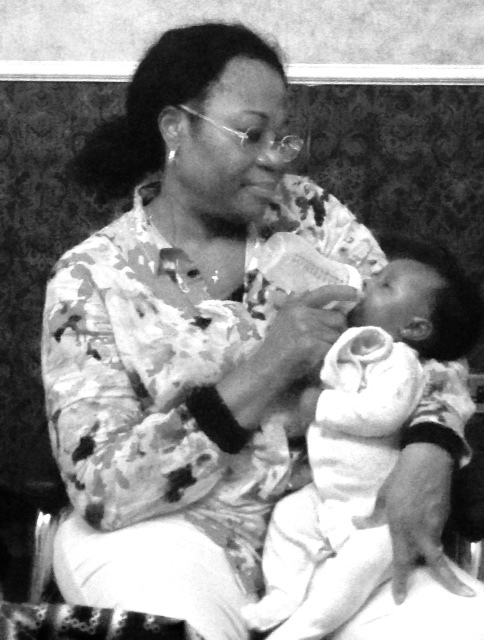
Dirichi is my granddaughter, who came to this world in a little over a year ago, blind with Michrophtalmia. At the time of Dirichi’s birth in Nigeria, I wasn’t able to assist my daughter at the most important time of her life, being a student far away in London. But I kept on constant surveillance on phone to monitor her well being and safe delivery.
However, three days after her birth, when she was reported not to have opened her eyes, I began to panic and pray, seeking God’s divine intervention. My son in law, a medical doctor, my daughter and all members of the family got our first wave of shock, and we began to ask questions, why and how this happened.
I suddenly realized what pains other families who have children with special needs, may have suffered. My daughter and her partner recovered faster from the pains. As soon as the baby was diagnosed with Michrophthalmia, they began to research best care for their special daughter.
Dirichi is over a year old, she is receiving full attention of her parents, grandparents, uncles, cousins, and her medical team. She’s got all sensory related toys, to help with her growing up and recognizing things through feeling, hearing and smelling. We as a family, have developed more interests in learning about disabilities and how to support helpless people with special needs.
My Didi, like I fondly call her, has become a greater part of my life as a mother and grandmother. My relationship with our creator, The Almighty God, has become even more rekindled, knowing that He knows it all. I had always cared for people with special needs, not knowing that I would be given the privilege to be blessed with one. Dirichi is really a blessing to me and my family, we shall keep loving her, and pray that God in His infinite mercy, grants us the strength and wisdom to serve Him well, while caring for His Special Child.
Prophet TB Joshua is my prayer partner, praying with him on http://www.emmanuel.tv has been a great support and hopeful, as he always says that, ‘God is still saying something’ Emmanuel! God is with us, Matt. 1:23. Good Morning 2015, in Jesus Name, Amen.
Boris Johnson has beaten Jeremy Hunt with 92,153 against 46,656 votes, hence elected as the new Conservative leader in the party members vote.
Boris, who was the former mayor of London is expected to succeed Prime Minister May on Wednesday instant.
Mr Johnson who is known to be pragmatic and decisive, promises to; ”energise the country, deliver Brexit on the 31st of Oct, unite his party, as well defeat Mr Jeremy Corby”.
Mr Johnson appreciates Mrs May with his words, that “it had been a privilege to serve in her cabinet”.
News, the medium of information gathering and distribution, has come a long way, from the 1800 Penny Press, to today’s tabloid newspaper culture and online journalism. The constant evolution of newspapers, have changed how stories and gossips are told and consumed by members of the public. “… news – scrawled onto clay tablets – in Ceacer’s age Romans read newsletters handwritten by slaves” (Tim Harrow 2010, p. 8).
‘News on The Move III – how to make journalism work on mobile on mobile’ was like a puzzle, and led to the question, when was news never on the move? Of course it has been, what is different today arguably, is the mode of movement, which has evolved from using bicycles and trains to distribute newspapers, to distribution through tablets and online. This has led to faster and wider audience reach. (Curran and Seaton 2010, p. 253) argued that, ‘…the rise of grassroots networks in the early 1980s coincided with the emergence of commercial online services, and a sustained growth of business networks and these were to prove a most significant development in the long run.’
News UK at its News Building in London, recently, hosted News on The Move III event, on ‘how to make journalism work on mobile’ was like a puzzle, and led to the question, when was news never on the move? Of course it has been, what is different today arguably, is the mode of movement, which has evolved from using bicycles and trains to distribute newspapers, to distribution through tablets and online. This has led to faster and wider audience reach. (Curran and Seaton, 2010, p. 253) argued that, ‘… the rise of grassroots networks in the early 1980s coincided with the emergence of commercial online services, and a sustained growth of business networks – and these were to prove a most significant development in the long run.’
The importance of news on the move, as it is in this internet era, and our everyday activities and lifestyle, cannot be over emphasized. News plays a great role in nation building; job creation, creativity, fashion, health and medical services, and so forth. If news didn’t move society would collapse. Darcey (2014), in his opening speech at the News on the Move III event, said, ‘we need to remind people what makes us special. Remind them how our journalism makes a positive impact. And remind them what would be lost if we were not around.’
In conclusion, News on The Move III event, was an eye opener to how far the net has altered the old ways of managing things in journalism. One of the speakers at the event, Martin Ashplant, the Director of Digital and Social Media at City AM, formerly head of digital at Metro online, informed the audience that Metro had evolved from desktop to desktop focused, into optimized mobile content. He said that today Metro could be viewed through ‘desktop, tablet, landscape, tablet portrait, mini, and smart phones.’ While, the BBC News Mobile Editor, Nathalie Malinarich gave an explanation of how the BBC is committed to reaching the younger generation, by making sure that the online mobile content works. According to Nathalie, ‘the BBC online question and answer program, got to its peak during the Crimean War and Ebola outbreak’, because of the fact that, viewers relied on BBC for quality information.
Journalism, from its beginning in the seventeenth century, was the medium of circulation of information from the grassroots to the ruling powers, and vice versa. Journalists were basically meant to expose the wrong doings of the ruling powers, as well as be the mouthpiece of the common man. In Journalism and Society Denis McQuail argued that, ‘the newspaper was characterized in one key phrase as ‘the nerves of the society’, akin to the nervous system of the human body’ (McQuail, 2013, p. 38).
Mike Jemson, the director of Media Wise, at his recent lecture to the University of East London students, argued that, ‘the Minorities, Asylum seekers, and the Grassroots, are not well represented in newspaper reports.’ However, the notion of news as a profit oriented commodity, arguable may have contributed to prioritizing the privileged and prominent over the less privileged or, the common people of the society. The grassroots of the societies are always anxious to read, watch and learn from the stories of the celebrities, while most celebrities may not be that anxious about the ordinary people, let alone the troubles of the Asylum seekers. McChesney (2000) cited in Martin Conboy’s Journalism in Britain, argued that, ‘…issues such as racism, social inequality or urban sprawl are not adequately dealt with or even taken as given, sin the historical and ideological context required is inimical to the news values of mainstream profit-making journalism’ (Conboy, M. 2010, p. 148).
In conclusion, journalism is a product of the society, and for journalists to be seen as ethical in their news reports, there is need to get rid of discrepancies from the news, and report stories truthfully, objectively and without bias, as recommended by Mike Jemson in his lecture.
John Conroy in The making of…Rwanda’s Untold Story, on BBC TWO online, argued that, ‘Marie was just a young when she witnessed the repeated bombing of Hutu refugee camps by Kagame’s artillery and the remains of Hutu refugees piled upon one another forming a hillside. She saw her own grandmother die of physical and moral exhaustion – she was anxious to ensure that people that massacres were committed by all sides – including Kagame’s Rwandan Patriotic Front, who until today have been viewed largely as the heroes of 1994’(Conroy, J. 2014).
However, the 1994 genocide of Tutsis, by their neighbouring Hutus, and celebration of a good leader, who probably should have been a prisoner, arguably, may be the failure of investigative journalism. The fact that President Kagame was able to convince the governments of the supper powers of the west, of his innocence, led to western journalists dancing to the tunes of their leaders, who supported Rwandan President, without a good nose for the truth, like Conroy’s investigative documentary. The truth about what actually happened in Rwandan mayhem came a little too late. In his book, The Universal Journalist, David Randall argued that, ‘one of the most admired skills is ‘nose for a story’- to see meaning and interest in what others might overlook’ (Randall, D. 2000, p. 16).
In conclusion, journalists are not expected to be biased in their judgement. The Tutsis have remained in pain and agony of the massacre of their loved ones. In his book, Balance and Bias in Journalism, Guy Starkey cited Wilson (1996:45) as he argued that, ‘telling it like it is – is the ‘uncommitted way’ – issues must be presented in order for that account to be ‘balanced’ (Starkey, G. 2007, p. xvi).
Financial journalism is concerned with the publication of money markets, business news, periodicals, general business stories and so forth. However, the journalist’s primary motive is to get the story, practicing with journalism standards, while the business giants, work towards profit maximization, and likely only release information that prospers their trade. The journalists, who cover business news, have access to interactions with business giants, and heads of governments often times, are criticized of bias. Eric Alterman in his book “What Liberal?” argued that journalists are:
‘…no longer the working-class heroes of the Front Page/His Gal Friday lore, elite journalists in Washington and New York are rock-solid members of the political and Financial Establishment whom they write. They dine at the same restaurants and take their vacations on the same Caribbean Islands’ (Alterman, E. 2008, p. 119).
However, generalizing and pointing accusive fingers on all journalists, would be wrong. The financial journalists, like all departments of journalism, are normally trained to abide by journalism ethical standards; to be objective, balanced and devoid of bias. In his book, Balance and Bias in Journalism, Gay Starkey argued that, ‘…objectivity implies detachment from an issue, or at least, representing it in as ‘balanced’ a way as could be achieved by someone without a vested interest in it’ (Starkey, G. 2007, p. xvi).
In conclusion, though corruption exists in almost all professions, devoted journalists ought to abide by the rules and accepting the fact that, journalists deserves to make their living, the primary objective, must be to serve members of the public, by providing them with quality news stories and events without bias. In his book, A History of News quoted Mohandas Gandhi, who said, “I have taken up journalism” – “not for its sake but merely as an aid to what I have conceived to be my mission in life” (Stephens, M. 2007, p. 172).




 The Beaty Groth Show